
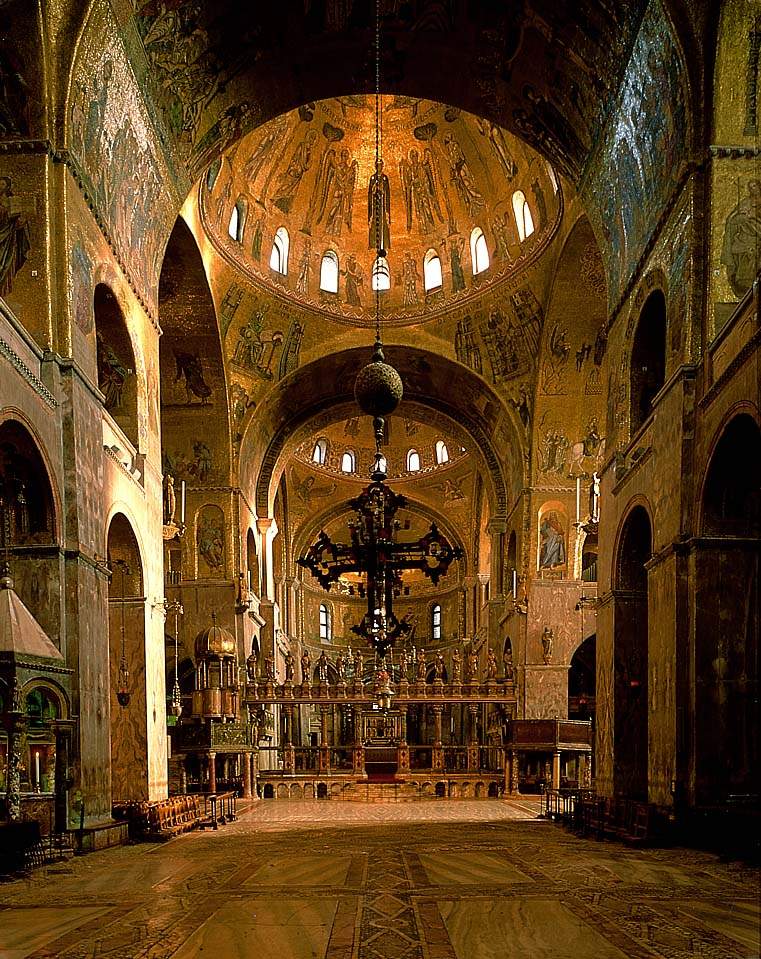
Skip the line
How priority entry actually works, what it really costs and which queues you avoid.
Read the guide →Everything you need to visit Venice's golden cathedral without queueing: up-to-date opening hours, 2026 prices, an interior map, advice from a seasoned traveller and online booking for skip-the-line tickets.
ⓘ This is not the official siteA selection of skip-the-line entries, guided tours and combos with the Doge's Palace, updated in real time. Booking ahead is practically essential at weekends and from April to October.
Data compiled from official sources and verified in May 2026. Always check the official site before purchasing for definitive fares.
St Mark's has been Venice's cathedral since 1807, but its story begins much earlier. In 828, two Venetian merchants smuggled the relics of St Mark the Evangelist out of Alexandria in Egypt, reportedly hiding them — according to legend — under cuts of pork to fool the Muslim guards. From that moment Venice acquired a first-rate patron saint and needed a building worthy of housing his remains.
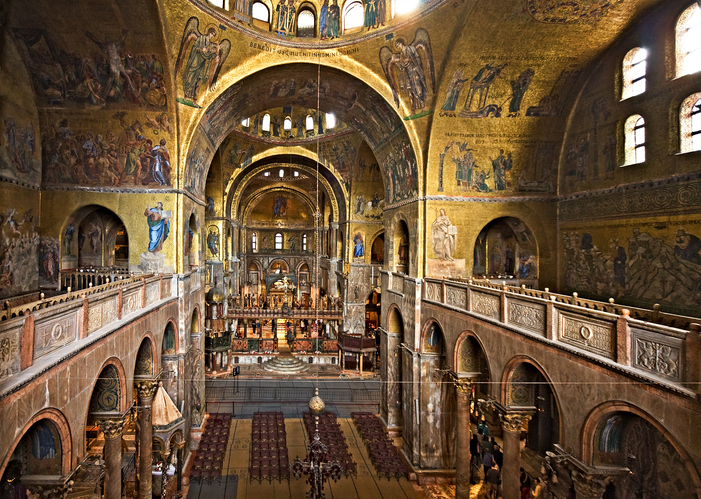
The current basilica is the third version of the church. The first was built in 832 and destroyed by fire in 976; the second was rebuilt almost immediately; the one we see today dates from 1063–1094, with centuries of later additions. The declared model was the Church of the Holy Apostles in Constantinople — a Greek-cross plan, five domes and gold-ground mosaics. That is why St Mark's is considered the purest example of Italo-Byzantine architecture in the West.
For more than 800 years — until the fall of the Republic in 1797 — the basilica was not the city cathedral but the Doge's private chapel. That distinction matters: it means that every Doge, for nearly a thousand years, ploughed personal resources into its decoration. The result is around 8,000 square metres of gilded mosaics, more than 500 marble columns imported from across the Mediterranean and a collection of relics and goldsmith work without equal in Europe.
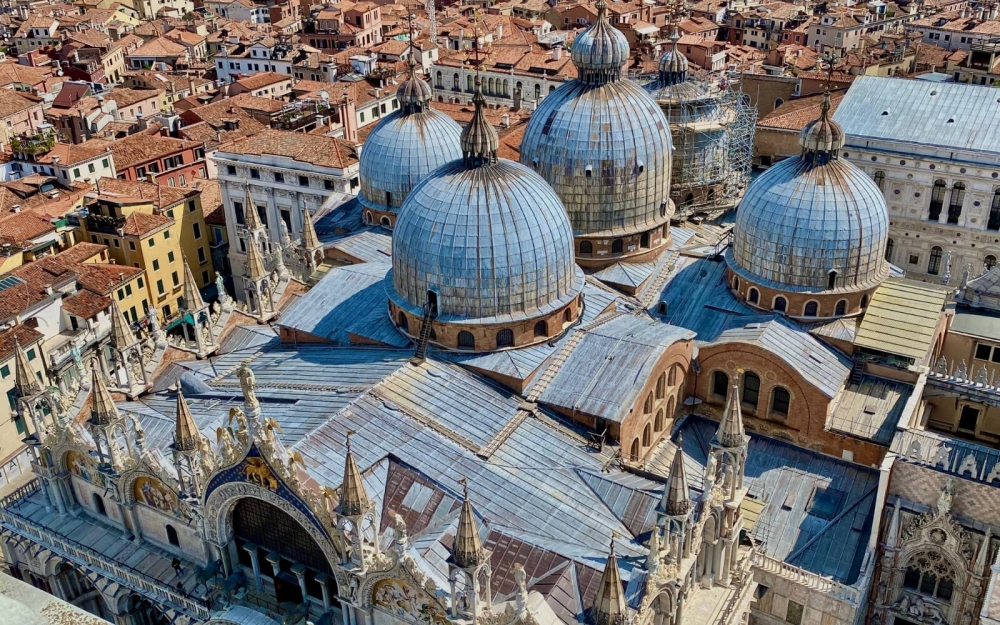
How priority entry actually works, what it really costs and which queues you avoid.
Read the guide →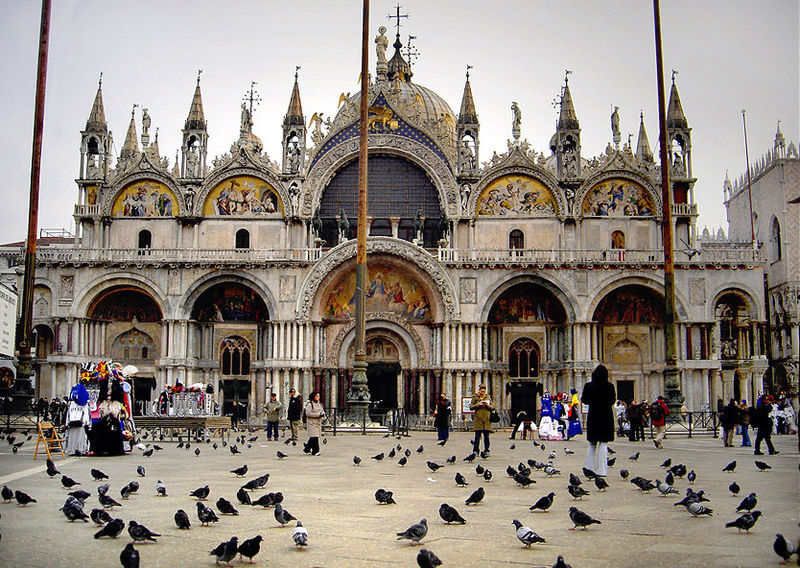
Comparison of official fares, reductions, free entries and audio-guide options.
Compare prices →The absolute must-sees: Pala d'Oro, narthex, sanctuary, domes.
Explore the interior →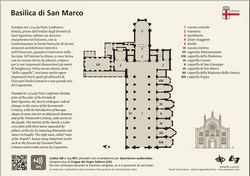
Is the joint ticket worth it? Comparison and possible itineraries.
Discover the combo →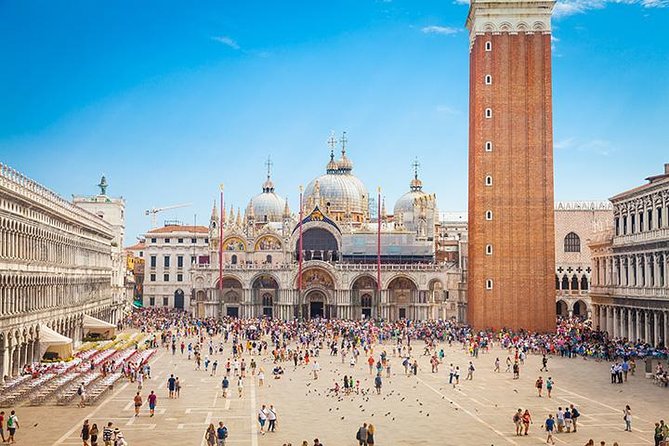
Lift access to the top, panorama, opening hours and separate tickets.
Go up the campanile →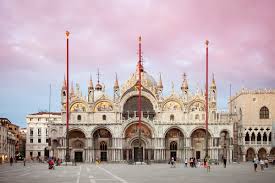
The main door, facing Piazza San Marco, is the busiest. At peak times — between 11:00 and 14:30 in summer — the free-entry queue can easily exceed 45 minutes. There are, however, real alternatives.
| Ticket type | Indicative price | What it includes | Best for |
|---|---|---|---|
| Basic entry + priority access | from €6 | Nave, mosaics, timed slot | A quick first visit |
| Basilica + Pala d'Oro | ≈ €11 | Adds the high altar and the Byzantine altarpiece | Art lovers |
| Basilica + Museum + Loggia | ≈ €14 | The original bronze horses and views over St Mark's Square | Families, photographers |
| 1-hour guided tour | €25–40 | Guide, priority entry, storytelling | Those who want to really understand |
| Basilica + Doge's Palace + Campanile combo | €60–80 | Venice's three icons in a single day | Short stays |
Indicative prices taken from basilicasanmarco.it and from authorised resellers. Updated in May 2026.
Timing makes the difference between a memorable visit and an hour wasted in the scrum. Here is the real calendar I've put together by combining official figures, Google Popular Times statistics and direct observation.
The Basilica faces straight onto Piazza San Marco at its eastern end. Venice can't be reached by car: practical options are the vaporetto (water bus), train and walking.
The Basilica is an active place of worship, not simply a museum. The rules are enforced strictly, especially in summer.
Access to the main nave is free, but the unbooked queue can take over an hour in high season. The paid ticket (about €6) guarantees a timed slot and priority entry.
45 minutes for the nave alone, 90 minutes if you add the Pala d'Oro and the Museum, more than two hours including the bell tower.
No, Sunday morning is reserved for religious services. Tourist access starts at 14:00.
It depends on the seller. Tiqets, for example, generally allows free cancellation up to 24 hours in advance.
The main entrance is partly accessible via a side ramp. The Pala d'Oro and the Museum involve steps. It's worth contacting the sacristy in advance.
Real-time availability, instant email confirmation and free cancellation up to 24 hours in advance on eligible tickets.